
Night Guards & TMJ Appliances: Important Medical Considerations

Dr. Andrew Kragor, DDS MS, Orthodontist
Co-Founder of PrecisionGuard
Orthodontist — Dr. Andrew Kragor
At PrecisionGuard, patient health and long-term oral stability are our highest priorities. While night guards and TMJ appliances are often marketed as simple solutions for teeth grinding and jaw discomfort, custom night guards are medical dental appliances that should be prescribed and monitored by a licensed dentist or orthodontist.
Teeth grinding, also known as bruxism, and temporomandibular joint disorders (TMJ/TMD) can have many underlying causes. Without a proper dental evaluation, using a night guard may mask symptoms rather than address the root problem.
After careful clinical review and guidance from our co-founder, orthodontist Dr. Andrew Kragor, PrecisionGuard has made the decision not to offer night guards or TMJ appliances directly to consumers without professional supervision.
This decision reflects our commitment to responsible oral health care and is based on the potential complications that can occur when these appliances are used without:
a comprehensive oral examination
professional bite analysis
TMJ joint evaluation
diagnostic imaging when necessary
Our goal is to ensure that individuals experiencing symptoms of teeth grinding, jaw pain, or TMJ discomfort receive proper diagnosis and treatment from a qualified dental professional.
Why PrecisionGuard Does Not Sell Night Guards Directly
Unlike many companies that sell night guards directly to consumers, PrecisionGuard believes that appliances used for teeth grinding or TMJ symptoms should only be used after a professional dental evaluation.
Night guards are medical dental devices, not simple consumer products.
When used improperly, they may lead to:
bite changes
jaw strain
uneven tooth pressure
delayed diagnosis of underlying dental conditions
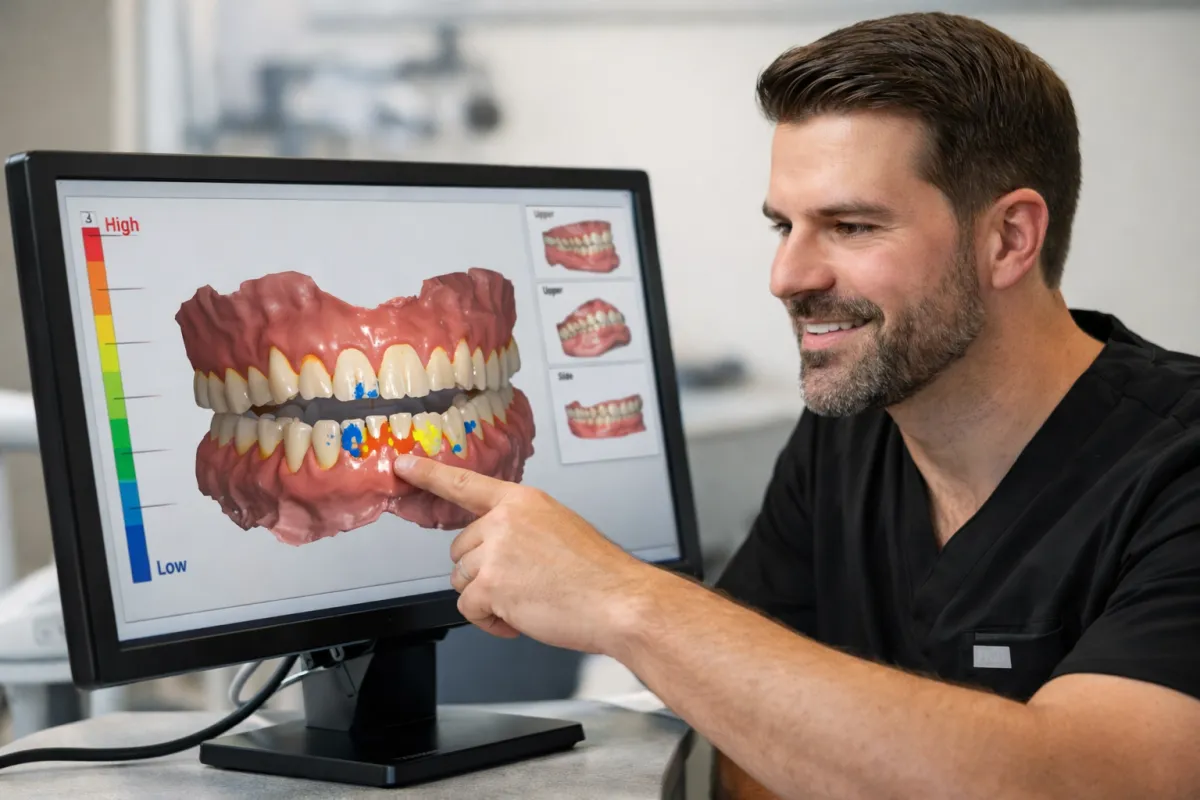
Dental professionals typically perform a comprehensive evaluation before recommending a night guard. This evaluation may include:
bite analysis
TMJ joint assessment
review of symptoms and habits
diagnostic imaging when necessary
Only after this process can a dentist determine whether a night guard is appropriate and how it should be designed.
PrecisionGuard encourages individuals experiencing teeth grinding or jaw pain to consult with a qualified dental professional before using any night guard or TMJ appliance.
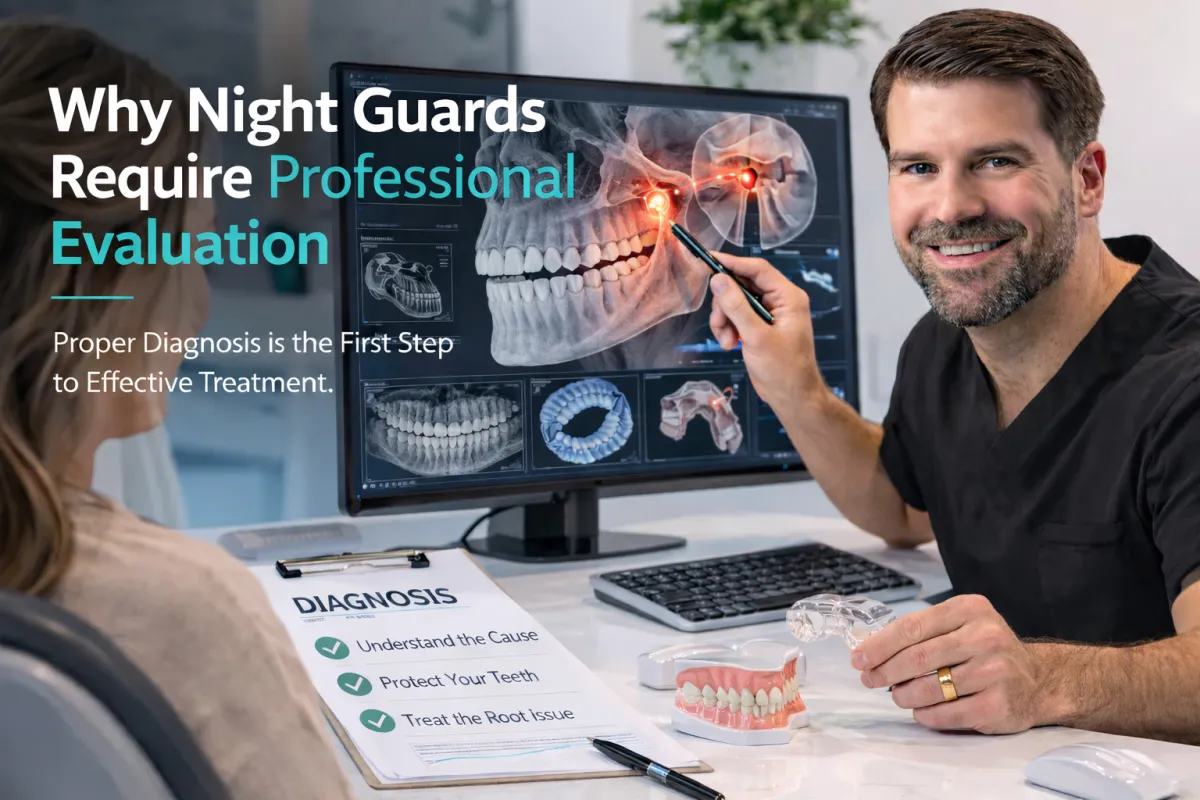
Why Night Guards Require Professional Evaluation
Night guards are often used to treat teeth grinding, also known as bruxism, and temporomandibular joint disorders (TMJ/TMD) can have many underlying causes. The Cleveland Clinic describes bruxism as a condition involving involuntary clenching or grinding of teeth during sleep that may lead to tooth wear, jaw discomfort, and headaches. However, these conditions may have a wide range of underlying causes that require proper diagnosis. In many cases, dentists recommend custom night guards that are specifically designed to match a patient’s bite and jaw alignment after proper diagnosis.
Common causes of grinding or jaw pain include:
Bite misalignment (malocclusion)
Jaw joint inflammation
Muscle dysfunction in the jaw or face
Orthodontic relapse after braces
Sleep disorders such as sleep apnea
Stress-related clenching or grinding
Structural joint abnormalities
Without a proper dental examination, imaging, and bite analysis, a night guard may mask symptoms rather than address the underlying cause of the problem. In some cases, using the wrong type of appliance may even worsen the condition over time.
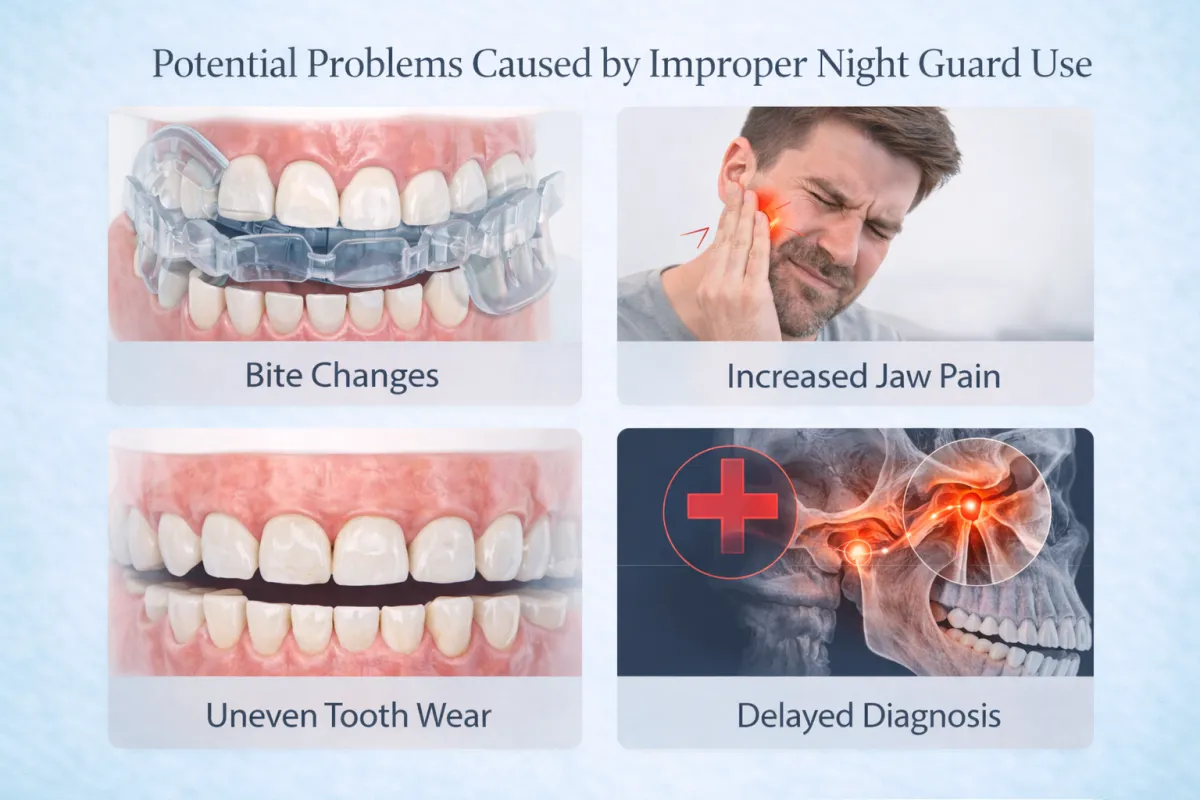
Potential Problems Caused by Improper Night Guard Use
When night guards or TMJ appliances are used without professional supervision, several complications may occur.
Although over-the-counter appliances are not designed for an individual’s bite. A professionally designed custom night guard distributes pressure evenly and is tailored to the patient’s dental structure. As a result, they may create uneven pressure on the teeth or reposition the jaw incorrectly.
Potential complications may include bite changes, increased jaw pain, muscle fatigue, uneven tooth wear, and delayed diagnosis of underlying dental conditions. According to the American Dental Association, teeth grinding can lead to enamel wear, tooth fractures, and jaw discomfort when left untreated.
Potential complications may include:
Bite changes
Increased jaw pain
muscle fatigue
uneven tooth wear
delayed diagnosis of underlying dental conditions
Understanding these risks is important before choosing any appliance for teeth grinding or TMJ symptoms.
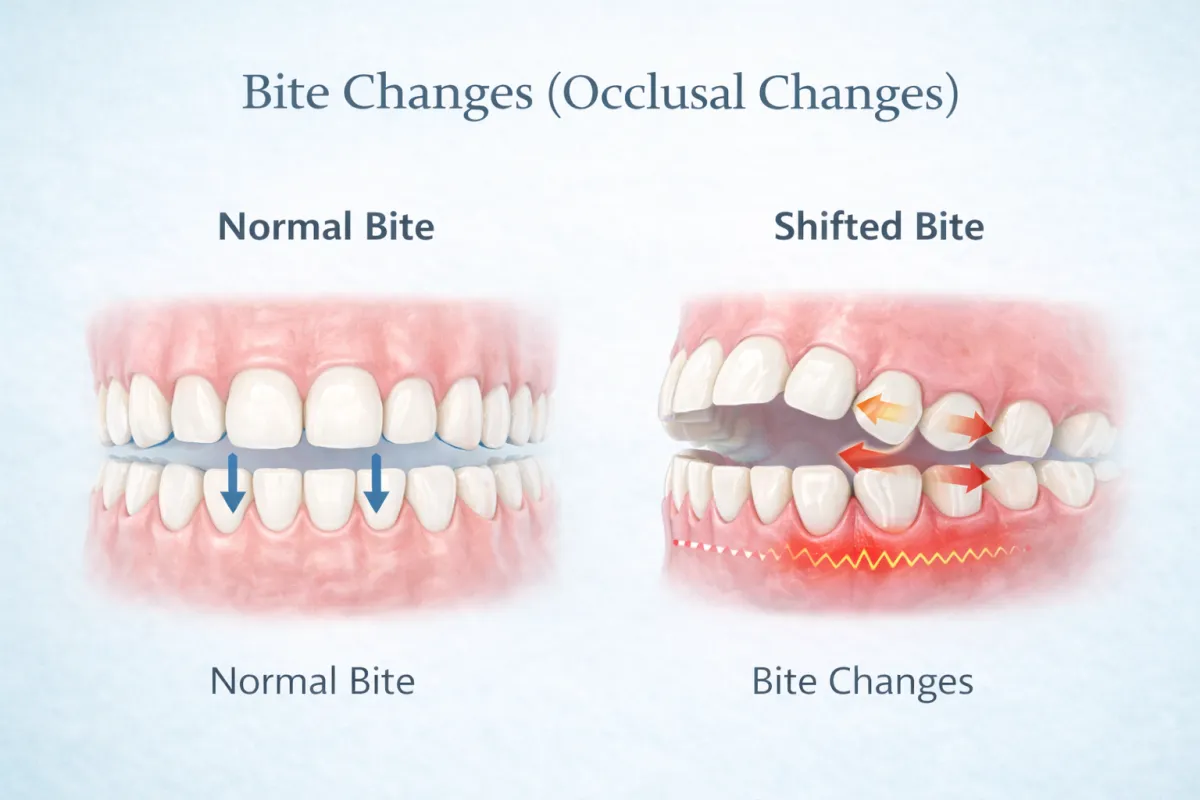
Bite Changes (Occlusal Changes)
Improperly designed night guards can gradually change the way the teeth come together when biting. Dentists refer to these changes as occlusal changes.
Over time, an ill-fitting appliance may lead to:
shifting of teeth
changes in bite alignment
uneven pressure on certain teeth
jaw muscle imbalance
If these bite changes become significant, orthodontic treatment may be required to correct the alignment.
Because of this risk, dental professionals carefully evaluate a patient’s bite before recommending any type of night guard.
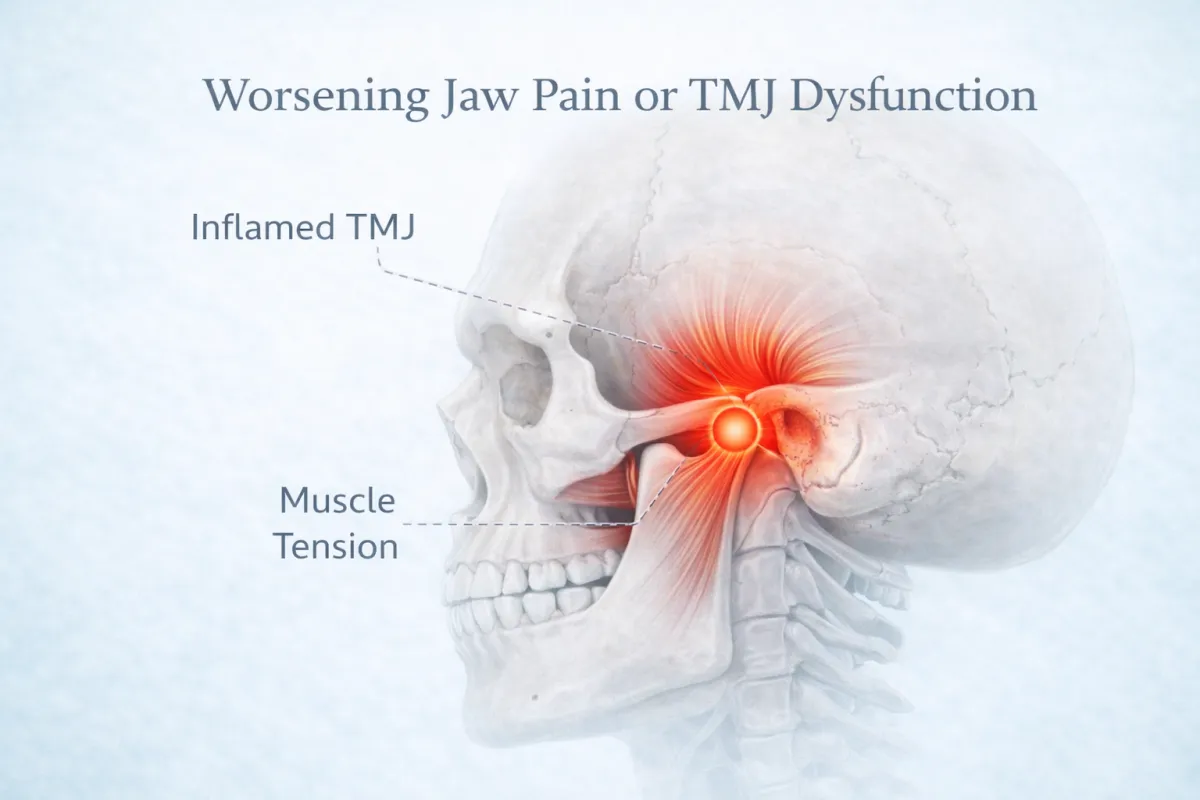
Worsening Jaw Pain or TMJ Dysfunction
Some appliances may unintentionally reposition the lower jaw. The National Institute of Dental and Craniofacial Research explains that temporomandibular joint disorders may involve pain in the jaw joint and surrounding muscles that control jaw movement.
Improper appliances may lead to symptoms such as:
increased jaw pain
clicking or popping in the jaw joint
difficulty opening or closing the mouth
facial muscle soreness
tension headaches
Proper TMJ treatment often requires detailed diagnostic evaluation, bite analysis, and professional monitoring.
A dentist or orthodontist can determine whether a night guard is appropriate or if other treatments may be needed.
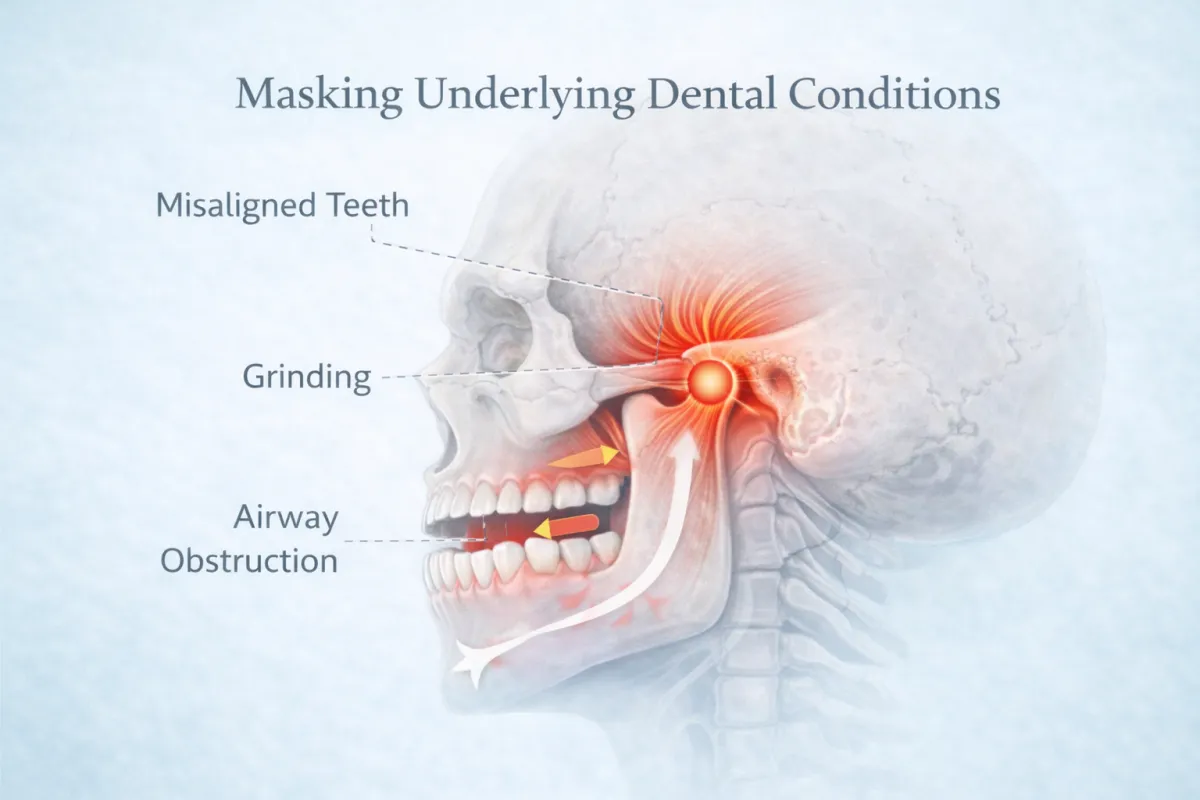
Masking Underlying Dental Conditions
Teeth grinding is sometimes a symptom rather than the primary problem.
In some patients, bruxism may be linked to other dental or medical conditions such as:
Misaligned teeth
Sleep apnea
Airway obstruction
Stress-induced bruxism
Structural joint abnormalities
Using a night guard without professional diagnosis may delay identifying the true cause of these symptoms.
Early diagnosis allows dental professionals to recommend the most effective treatment plan.
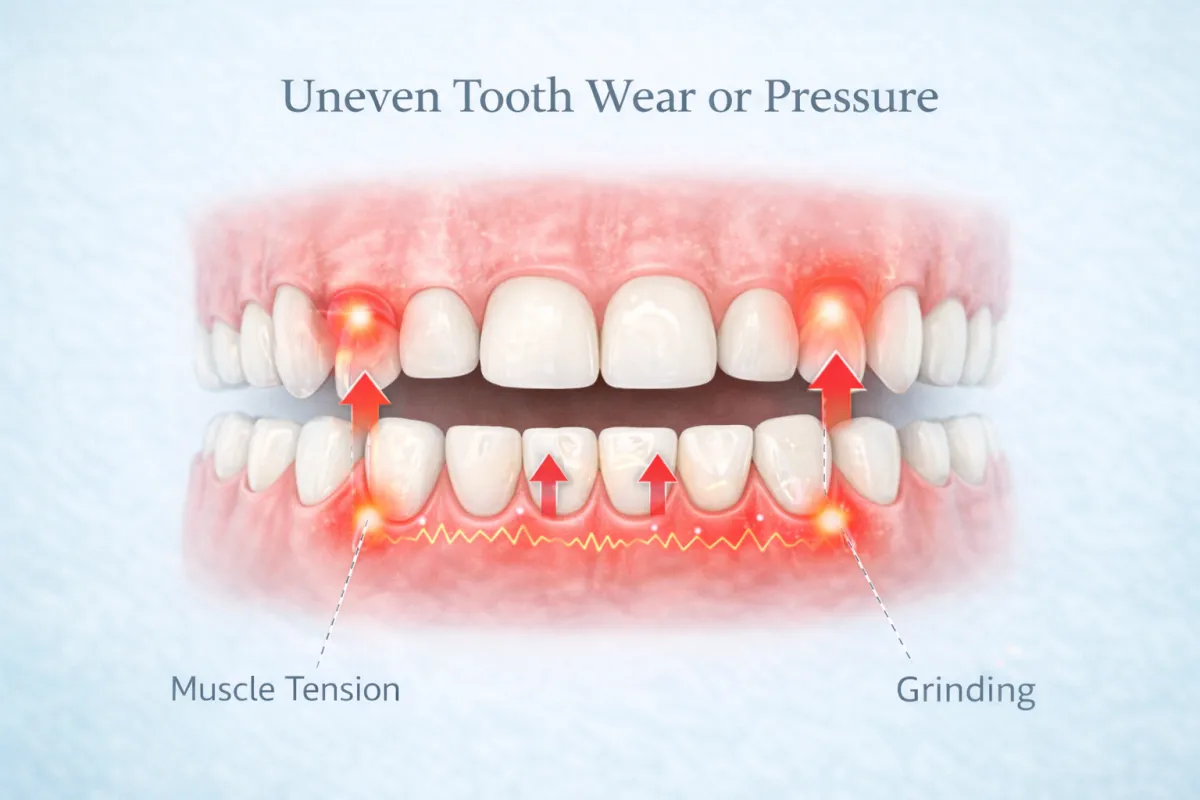
Uneven Tooth Wear or Pressure
A poorly fitted appliance may distribute biting forces unevenly across the teeth and jaw.
This uneven pressure may result in:
tooth mobility
gum irritation
excessive wear on certain teeth
damage to dental restorations such as crowns or fillings
Custom dental appliances are designed to distribute pressure more evenly across the bite, which helps reduce these risks.
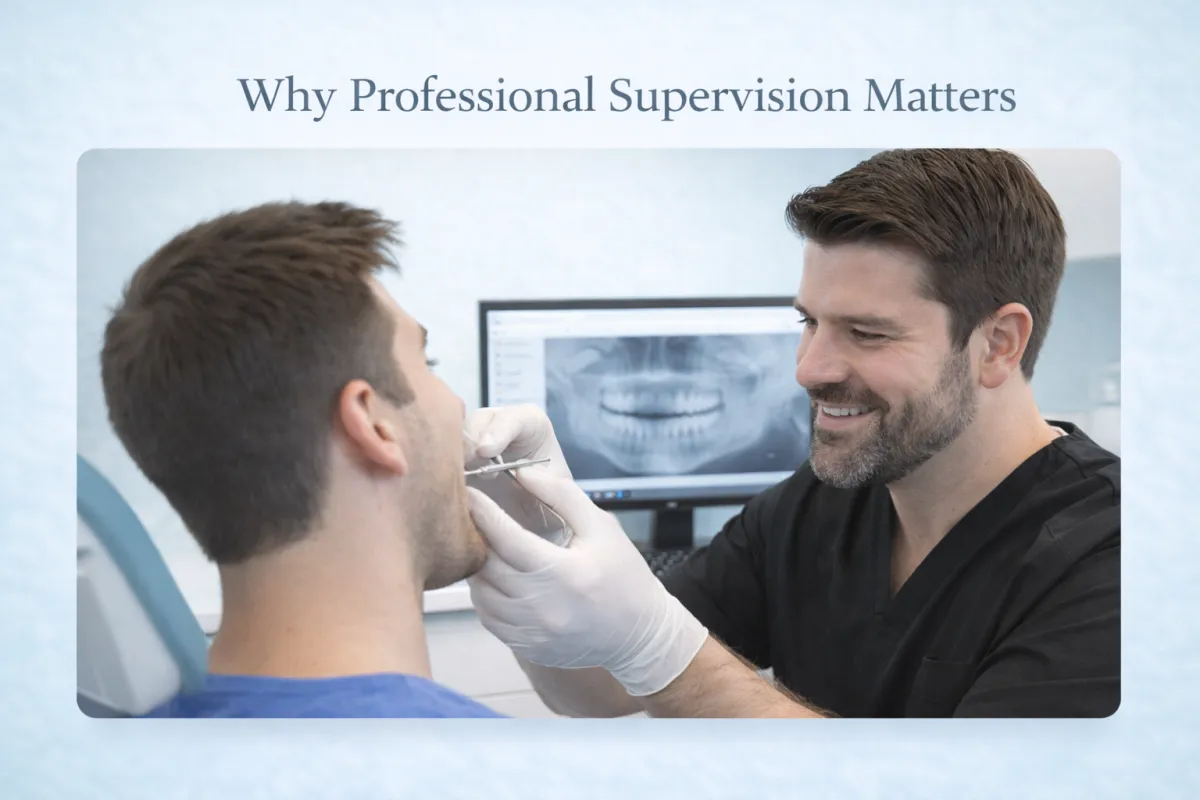
Why Professional Supervision Matters
Dentists and orthodontists follow a careful diagnostic process before recommending any appliance for bruxism or TMJ symptoms. After evaluating the patient’s bite and symptoms, a dentist may recommend a custom night guard designed to protect the teeth while maintaining proper jaw alignment.
A professional evaluation may include:
comprehensive oral examination
bite analysis (occlusion evaluation)
TMJ joint assessment
review of symptoms and habits
imaging such as dental X-rays or CBCT scans
Based on this evaluation, a doctor determines:
Whether a night guard is appropriate
What type of appliance is needed
How the appliance should be designed
How treatment should be monitored
Our Commitment to Responsible Oral Health Care
At PrecisionGuard, our focus is providing doctor-designed sports protection through high-performance
custom sports mouthguards for athletes that protect teeth during athletic competition.
Sports mouthguards are designed to absorb impact and prevent dental injuries during athletic activity.
However, appliances intended to treat medical conditions such as bruxism or TMJ disorders require direct supervision from a dental professional.
For this reason, we encourage individuals experiencing symptoms of teeth grinding or jaw pain to consult with their dentist or orthodontist before using any night guard or TMJ appliance.

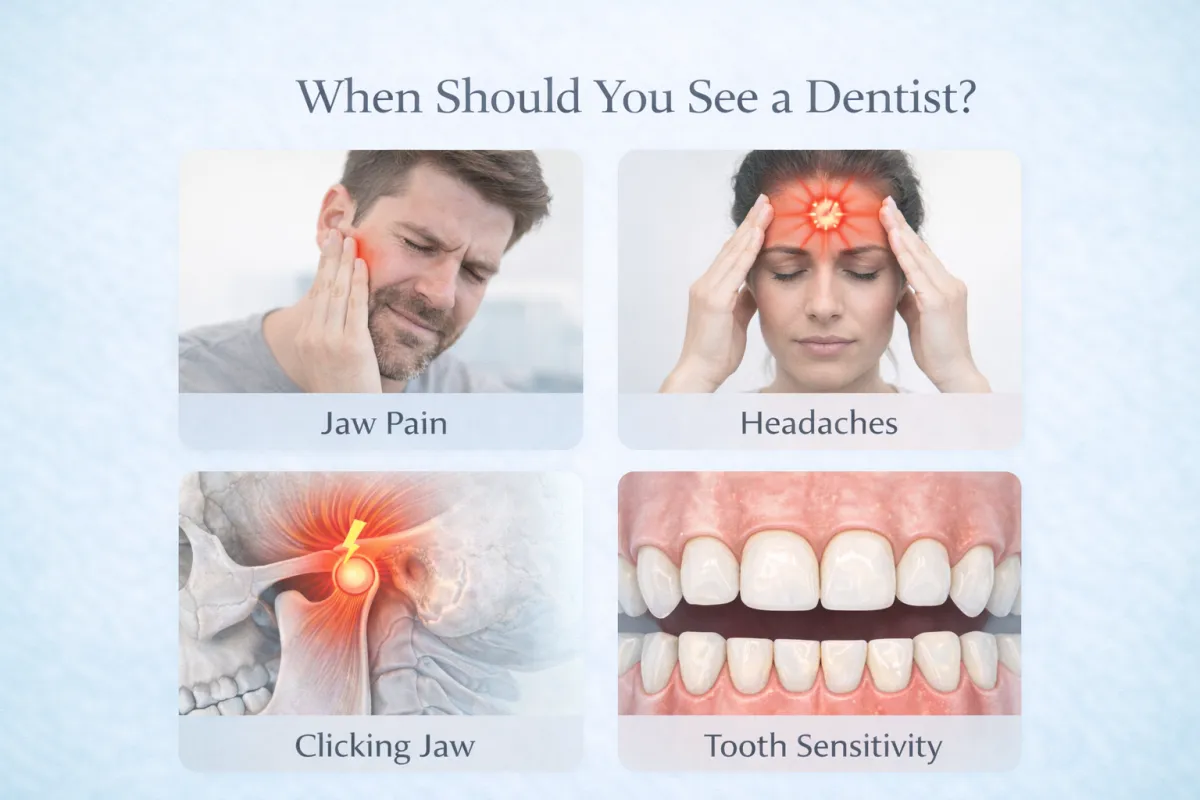
When Should You See a Dentist?
If you experience any of the following symptoms, a professional dental evaluation is recommended:
Jaw pain or stiffness
Clicking or popping in the jaw joint
Frequent morning headaches
Tooth sensitivity or unusual wear
Facial muscle soreness
Difficulty opening or closing your mouth
Early diagnosis can help prevent long-term complications and ensure the correct treatment plan is used.
STILL NOT SURE?
Frequently Asked Questions About Night Guards
What is a custom night guard?
A night guard is a dental appliance worn during sleep to protect teeth from grinding or clenching, a condition known as bruxism. Night guards help reduce pressure on the teeth and jaw muscles, which can prevent tooth wear, fractures, and jaw discomfort.
Do night guards help with teeth grinding?
Night guards can help protect teeth from the damage caused by grinding and clenching. However, they do not always treat the underlying cause of bruxism. A dentist may recommend a night guard after evaluating your bite, jaw joints, and symptoms.
Can night guards cause bite changes?
Yes, improperly designed or poorly fitted night guards may cause bite changes over time. If an appliance does not distribute pressure evenly or alters jaw positioning, it can lead to shifting teeth or changes in how the bite comes together. This is why professional dental supervision is recommended.
Do night guards help with TMJ disorders?
In some cases, dentists may prescribe specialized appliances to help manage symptoms related to temporomandibular joint disorders (TMJ/TMD). However, TMJ conditions have many possible causes, so proper diagnosis and professional evaluation are important before using any appliance.
Are over-the-counter night guards safe?
Over-the-counter night guards may provide temporary protection for teeth grinding, but they are not customized to an individual’s bite. Because of this, they may create uneven pressure on the teeth or jaw. A dentist can determine whether a custom appliance is appropriate and ensure proper fit.
When should you see a dentist for teeth grinding?
You should consult a dentist if you experience symptoms such as jaw pain, frequent headaches, tooth sensitivity, worn teeth, or clicking in the jaw joint. Early evaluation can help identify the cause of grinding and prevent long-term dental complications.
Can stress cause teeth grinding?
Yes. Stress and anxiety are common contributors to bruxism. Many people grind or clench their teeth during sleep when experiencing high levels of stress. Dentists may evaluate lifestyle factors along with dental alignment and jaw function.
How do dentists diagnose bruxism?
Dentists typically diagnose bruxism by examining tooth wear patterns, evaluating jaw muscle tenderness, reviewing symptoms, and assessing the patient’s bite alignment. In some cases, imaging or sleep evaluation may be recommended.
PrecisionGuard’s Focus
PrecisionGuard specializes in doctor-designed custom sports mouthguards engineered for impact protection and athletic performance.
These devices are fundamentally different from therapeutic dental appliances used to treat medical conditions.
Our focus remains on protecting athletes while promoting responsible oral healthcare decisions.
Medical References:
(470) 730-5473
© Copyright 2026 PrecisionGuard. All rights reserved.

